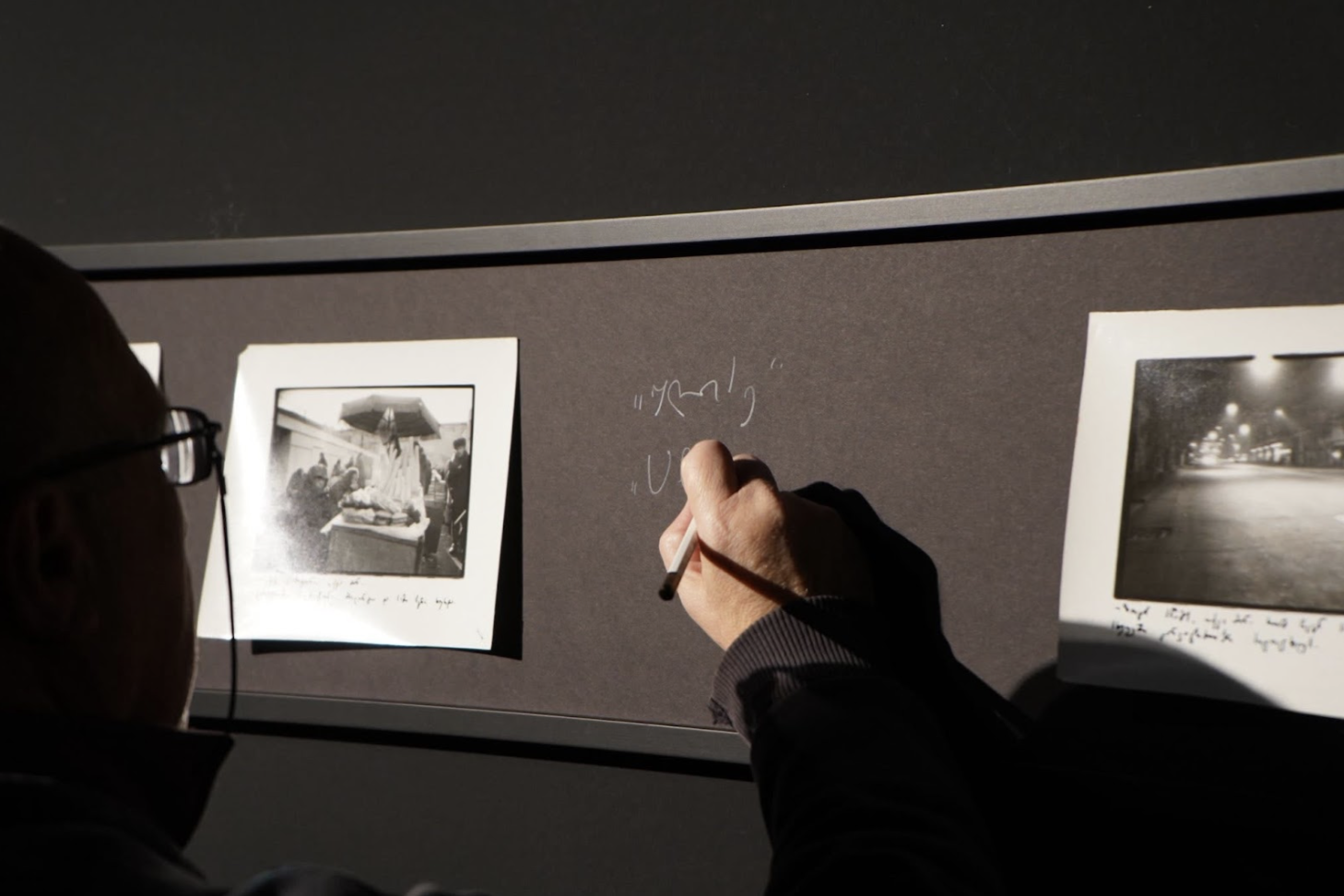
დავიწყებული მნიშვნელობები. გურამ წიბახაშვილის გამოფენისთვის, „ასვლა“ | მედეა იმერლიშვილის სტატია
“Ascending” - the very word, and even more so what we witness in these photographs by Guram Tsibakhashvili, which we can say we both observe and participate in - immediately evokes the ancient myth of Sisyphus. By the power of fate, the will of the gods, or some inexplicable cosmic mechanism, Sisyphus is condemned to a never-ending task: carrying a boulder up a mountain, only for it to roll back down. This boulder is both his burden and the essence of his existence - the constant, unceasing effort to drag it to the summit. Whether he reaches the top or not, the boulder inevitably slips away, and he must begin the steep ascent once more.
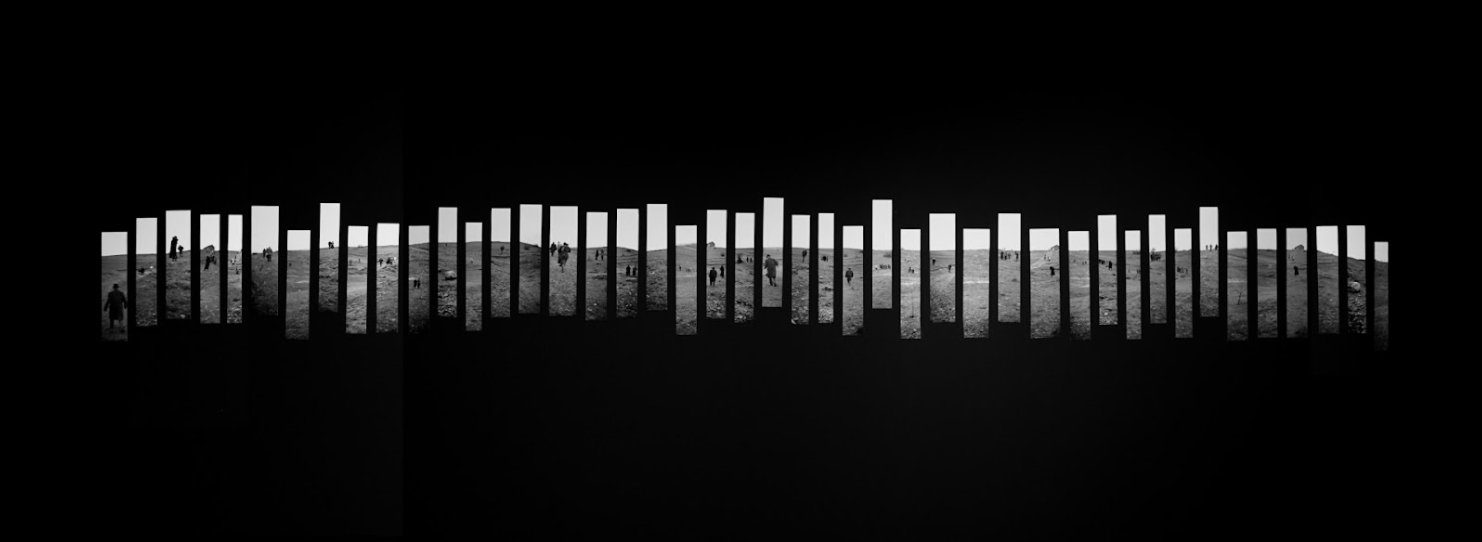
An installation created with fragments of photographs especially for the exhibition. From the series “Ascending”. © Guram Tsibakhashvili. 1988
If we remove the first letter from the word “Ascending” in Georgian, the resulting word may recall another story, myth, or biblical journey – the great exodus recounted in the Book of Exodus. Unlike Sisyphus’s fate, this journey reaches its conclusion, albeit after forty long years.
Such an interpretation offers hope. Yet, confronted with our own history – our past and present – it is difficult to avoid feeling like Sisyphus.
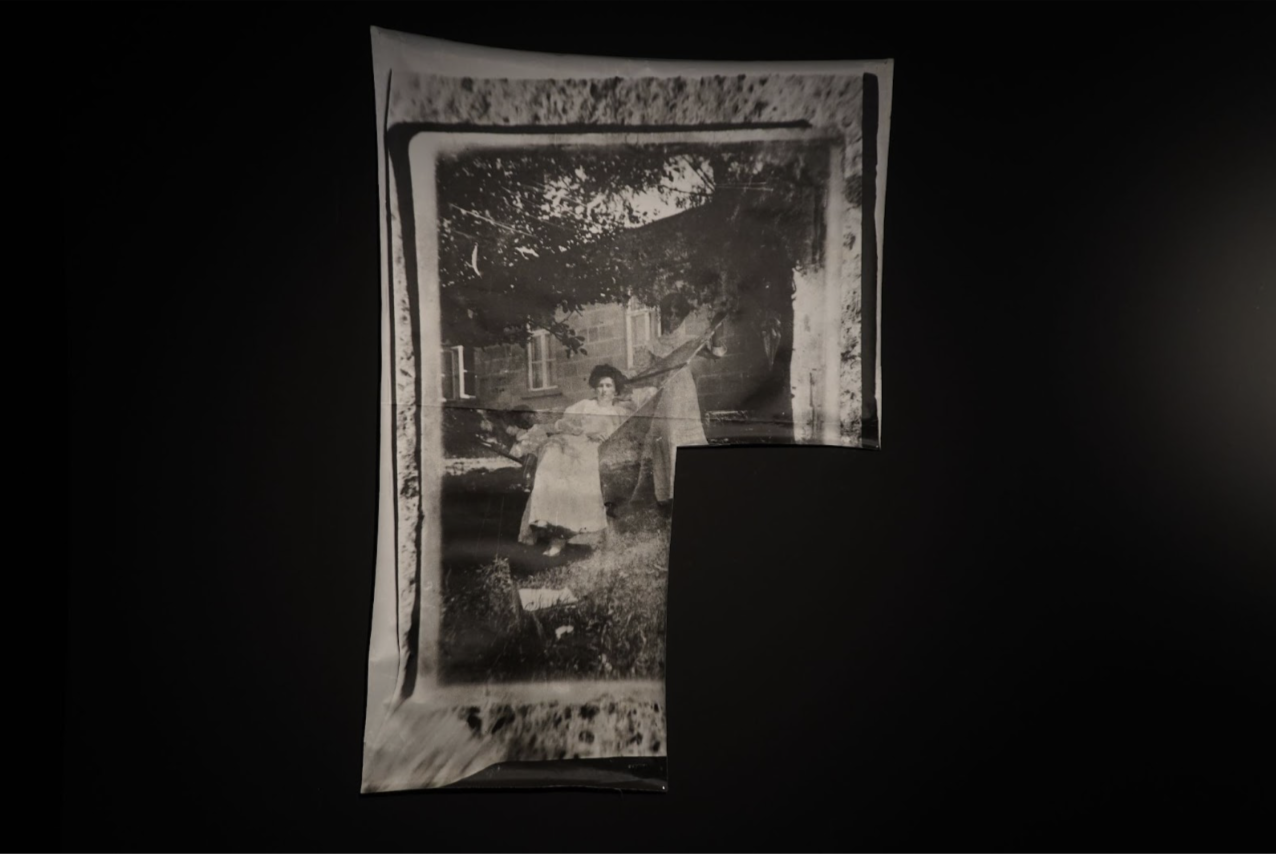
“Autobiography before birth”. © Guram Tsibakhashvili
The exhibition “Ascending,” hosted by the Photography and Multimedia Museum, brings together works created by Guram Tsibakhashvili between 1988 and 2016. These documentary and conceptual pieces, many part of the artist’s renowned series such as Explanations and Ulysses, form multiple parallel, mutually illuminating streams - creates a unified space of thought.
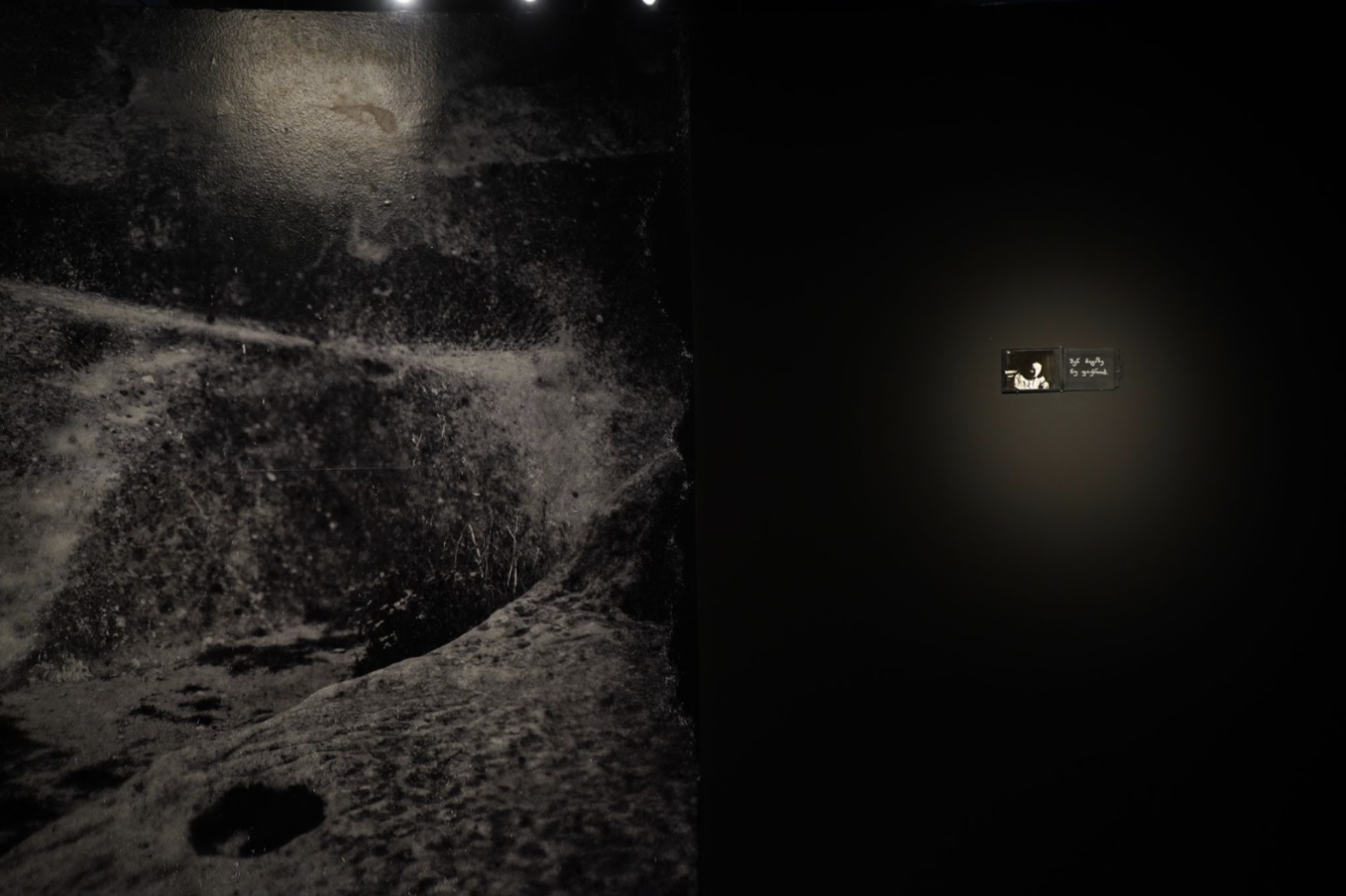
How are historical events, everyday occurrences, and personal encounters reflected in the artist’s consciousness, and in what form do they return to us - with what hints, sequences, or explanations? Why explanations? Why is it necessary to articulate these words? Have we forgotten, or perhaps never truly known, their meaning?
The image hovers on the edge of being – something slips away, evades our grasp – like memory, like existence itself. The world in which these actions unfold is fleeting, changeable, and replaceable. Slogans once emblazoned on Soviet banners fade quickly – “Glory to the Fatherland! Glory! Glory!” – yet the homeland itself remains - “the country, the region where one is born and becomes a citizen”.
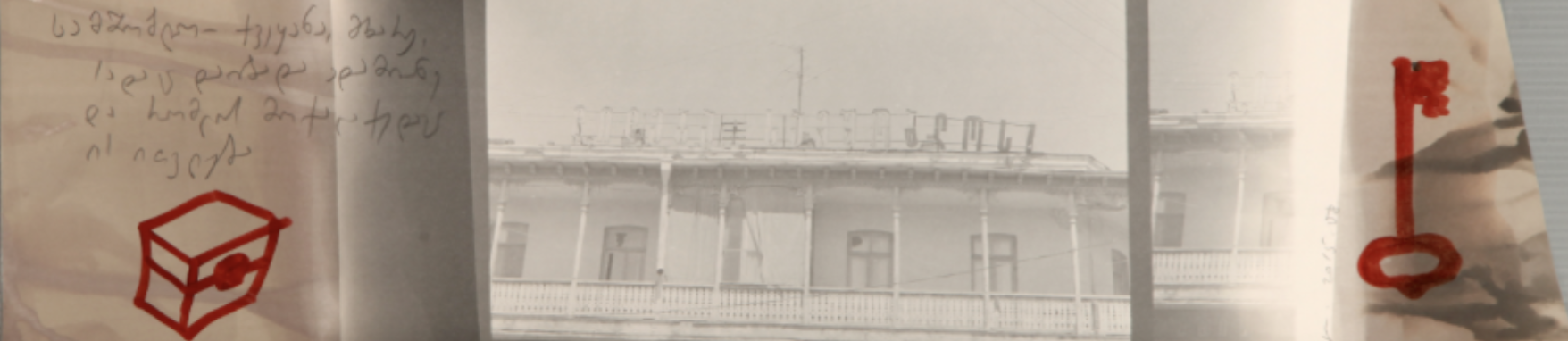
To participate in life, to live within it, carries the paradoxical danger of being unable to fully see or touch what surrounds us because we are part of it. The photographer intervenes here, preserving what would otherwise escape us. In Susan Sontag’s words, he “reconstructs history from its fragments,” describing, narrating, explaining, and reminding.
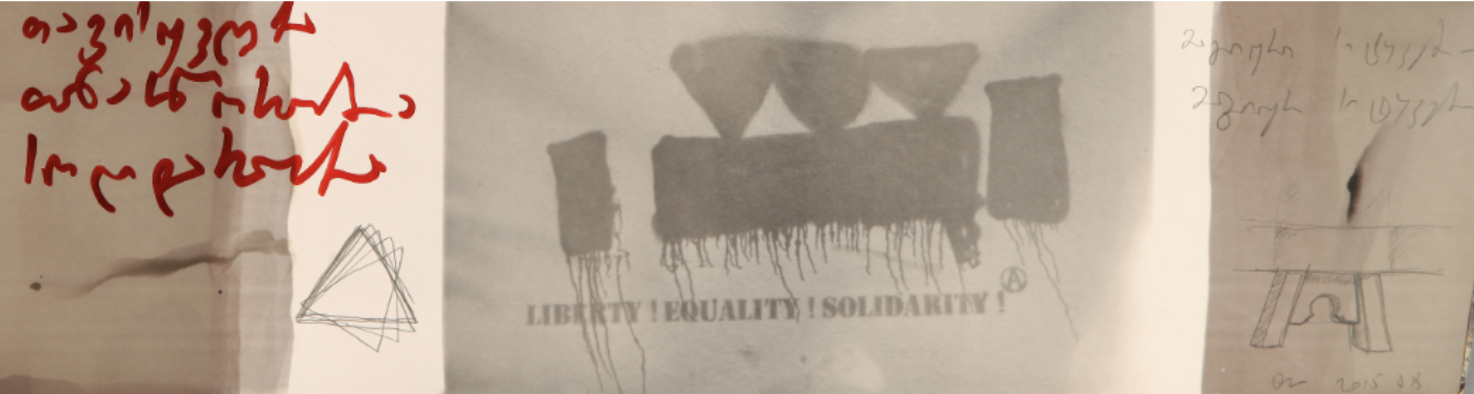
The artist explains love, care, protest, order - words that exist somewhere, or should exist. And when these values exist or should exist, yet remain unseen, a sense of worry emerges.
Where there is a person, a homeland, freedom – the possibility of expressing one’s will - love, care, protest, there also emerges a prison. And the question inevitably arises: how does a prison brake? How does this endless cycle end?